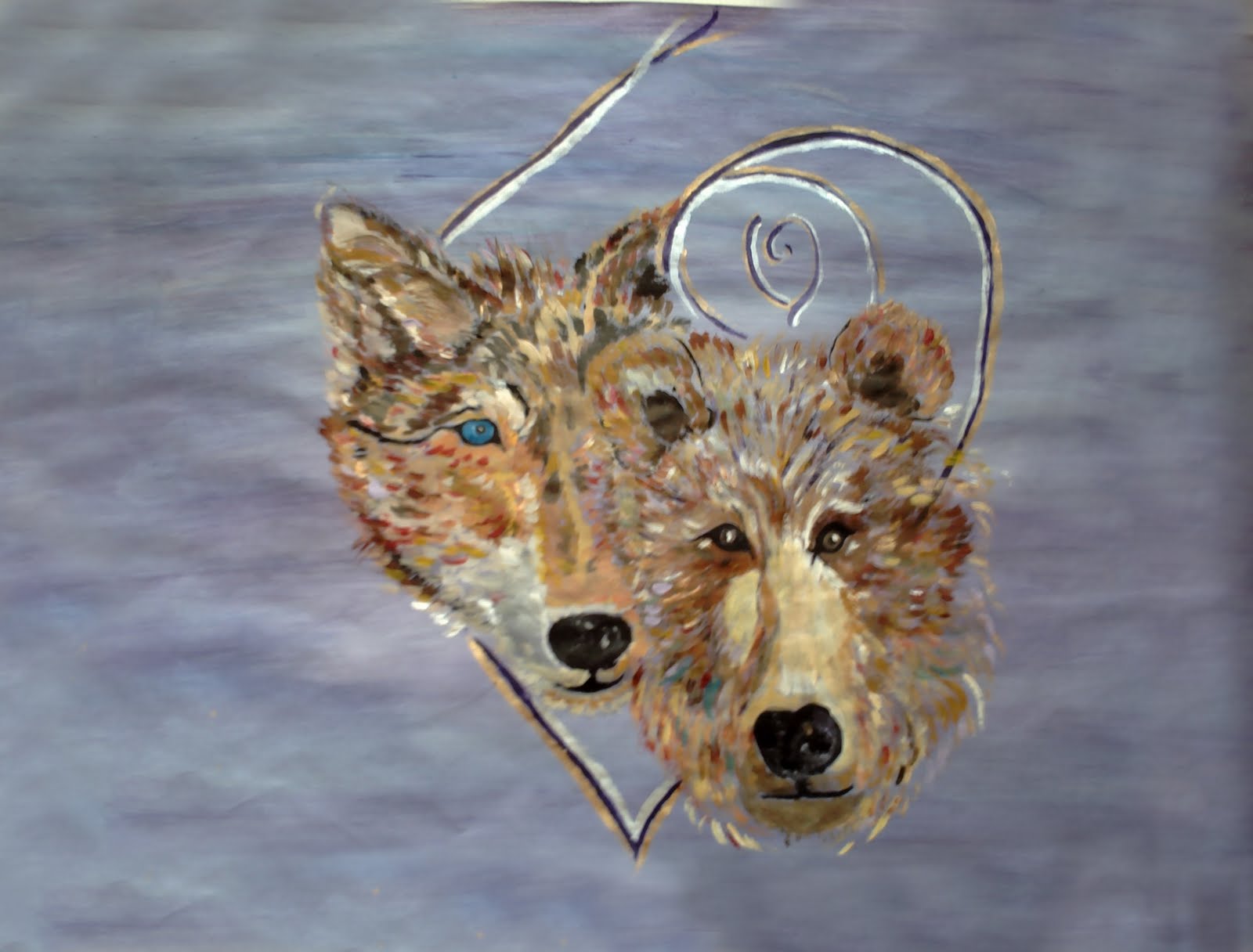
Day Dreaming your life a – way…..
There is a theory about daydreaming. Let’s face it there is more than just the one!
My school report card was full of how much of a day dreamer I was in so many of my classes that it was a wonder there was any room left for anything else. Much to my chagrin this would be changed to “must try harder”, but daydreaming is something that you don’t have to try to do.
All of the adults in my life and some of my peers would be very upset with me for not being present while in their presence. It wasn’t as if there was a problem from my point of view, I would just get to a space where the words of the teacher, parent, sibling, friend or whomever would become a drone and life would become very still and quiet because I have a volume control inside my head and it would be slowly but irrevocably turned down to silence…………………..
The premise that I am stating here is that at that time – in days of yore there was no recognition that actually there was something I was good at. Their focus was on their criteria, mine was on my own; it was deemed inappropriate behaviour and ever so slightly arrogant that I should consider myself able to go into the dwam, trance or whatever they wanted to call it. Personally I believe that they were a bit envious of my ability to switch off. That what I was doing was not recognised as a positive is really not surprising – even today teachers are teaching with the same criteria as before and their criteria now has criteria from the Government as to how they should be teaching and what targets they should be reaching. Still they forget that a class of pupils is made of individual people. Some of whom have no idea what it going on as their method of learning is entirely different from the person they are sitting next to.
What happens when the brain is not being stimulated to learn? What happens when the inspirational button is not pushed? What happens when a child is left to flick between channels and not engaged by another human who can stimulate and inspire and motivate?
Look around you, how many children and teenagers and young adults are sitting in front of a box, playing monotonous games of destruction in order to get to a different level.
If we only stimulate one part of the brain then we lose the functional ability of the others. We switch it off. We don’t daydream anymore we go on stand-by.
White noise, the noise when the signal is not tuned in, the brain is constantly looking for a signal and at one point it will get hungry enough to latch onto the first strong signal it finds. So is this why some young people get into the wrong company, take drugs, seek authority figures by accessing a machine, since a machine has been a baby sitter and a trusted one at that; why should they not?
Stand-by on a computer or a television is when the machine is waiting to be fully turned on.
What is it that turns your nearest and dearest on – in respect of the choices they will make?
At what point do we realise the soporific effect of the box in the room whether it be a television or computer? At what point do we realise that time is being stolen from us?
At what point do we sit down and think that we are not day dreaming anymore we are on stand-by, ultimately at the mercy of a remote control?
Day dreaming is a useful tool – ask any creative genius. Einstein was a day dreamer and he dreamed up E=MC2.
Day dreaming can also be re-learned, not taught exactly – too restrictive and in some cases one persons’ day dream is another’s ennui, and it is an entirely personal thing.
Being able to ‘go with the flow’ is something that has even more relevance in the world today. Stress relief. People who are stressed have rarely any kind of good sleep patterns and if we don’t dream we become mentally challenged in different ways; allowing someone to daydream could be the way back to getting a hold on their lives – the Universe is full of such paradoxical games.
Like everything else that we dismiss as unimportant until we understand why we needed it in the first place; the ability and the need to dream is all to easily lost in the white noise of stand-by until we eventually experience burn out.
So get yourself a bit of space and make time to day dream – see where it takes you – write it down afterwards or even record it and read / listen to it again after a couple of days. Notice how you feel directly afterwards. Notice how it felt during and then realise that you were in a trance and then wonder what else you could do in that space, without some Ghengis Khan in twin set and pearls bearing down upon you to bellow in your ear to wake up and pay attention.
Showing posts with label mental health. Show all posts
Showing posts with label mental health. Show all posts
Wednesday, 9 July 2008

Sunday, 10 June 2007
Instinctively self destructive...
The Outcome of Communication
One of the tenets of NLP is that the outcome of communication is in the result that you get.
I am discovering that in certain situations when I am being less than totally magnificent in my communication the results I am getting are on the surface, pleasing, however I am aware of their placatory and transient nature, particularly within the scenario I find myself playing out on a day to day basis at this point in time.
A friend asked me recently had I ever heard of the adage of ‘trapping more flies with honey’? Of course I have, my tendency though is to either leave them alone or kill them instantly.
Thinking about it dispassionately (?) I wonder if this has as much to do with my personal coping mechanism, as it has to do with my beliefs, which are of course inextricably linked.
This is something that I have learned about sentient beings, we make connections and having made them we use them as convincers banging home the rightness of it. For the reasoning and more rational animal this is a complicated procedure – or not. It can just as easily be a knee jerk reaction to an external stimulus that provokes an emotional response, jeez would that be the birth of a strategy that would possibly be compounded by proving it again and again – compounding itself, becoming rooted in our neurology. That old survival fight or flight still crazy after all these millennia, and still so strong.
In the aftermath of an adrenaline high response attitude there is only a need to rest, conflict especially within oneself is exhausting and it can be the result of a learned behaviour, a less than totally positive behaviour at that.
I know what my friend means about the honey. For me it’s a bit like learning something new and strange and until I am able to be secure in this alien world in all my states, I am likely to slip back to swatting the flies, irrevocably and taking the hollow victory of being placated until I go away and leave them to lick their wounds and build their walls of resentment so that I become the trigger for their adrenaline response.
Eventually this too will cease and there will be no communication at all. What is the point in that?
The self-fulfilling prophecy goes around again and nothing new is learned, only re-iterated.
So, in order to rewire my neurology I have to examine those static beliefs about myself, and change them now.
One of the tenets of NLP is that the outcome of communication is in the result that you get.
I am discovering that in certain situations when I am being less than totally magnificent in my communication the results I am getting are on the surface, pleasing, however I am aware of their placatory and transient nature, particularly within the scenario I find myself playing out on a day to day basis at this point in time.
A friend asked me recently had I ever heard of the adage of ‘trapping more flies with honey’? Of course I have, my tendency though is to either leave them alone or kill them instantly.
Thinking about it dispassionately (?) I wonder if this has as much to do with my personal coping mechanism, as it has to do with my beliefs, which are of course inextricably linked.
This is something that I have learned about sentient beings, we make connections and having made them we use them as convincers banging home the rightness of it. For the reasoning and more rational animal this is a complicated procedure – or not. It can just as easily be a knee jerk reaction to an external stimulus that provokes an emotional response, jeez would that be the birth of a strategy that would possibly be compounded by proving it again and again – compounding itself, becoming rooted in our neurology. That old survival fight or flight still crazy after all these millennia, and still so strong.
In the aftermath of an adrenaline high response attitude there is only a need to rest, conflict especially within oneself is exhausting and it can be the result of a learned behaviour, a less than totally positive behaviour at that.
I know what my friend means about the honey. For me it’s a bit like learning something new and strange and until I am able to be secure in this alien world in all my states, I am likely to slip back to swatting the flies, irrevocably and taking the hollow victory of being placated until I go away and leave them to lick their wounds and build their walls of resentment so that I become the trigger for their adrenaline response.
Eventually this too will cease and there will be no communication at all. What is the point in that?
The self-fulfilling prophecy goes around again and nothing new is learned, only re-iterated.
So, in order to rewire my neurology I have to examine those static beliefs about myself, and change them now.
Monday, 28 May 2007
Just a thought on States of Mind
Depression, a bigger state than Texas…
And I don’t mean Alaska!
Depression, deeply dark, totally autocratic, no sense of boundaries! Sounds like my last date!
It is also a state of mind, and like other states it does have boundaries, we just don’t recognise them.
When we are travelling there are road signs, place signs, directions and miles to go signs, there are even state lines; borders we call them. There are no visible signs for the long journey that depression is; there are only indications, symptoms.
How many people do you think know that depression is something that can be treated to a successful conclusion? How many people do you know have it, have had it or has someone in their immediate family dealing with it?
How do you treat a person you know has it, as in how do you interact with them? Do you steer clear not wanting to get involved, do you tell them to ‘get a grip, pull themselves together and just get on with it? Do you sit with them and empathise, ‘there, there, I know, I know’? The thing is – you don’t know, you can’t know, even when you have been there yourself because everyone’s is unique to them. It is their state; they own it and they are completely in it to the exclusion of all else. It takes that much energy.
The word itself is in fact overused, like the word ‘love’, which is bandied about as a step up from just liking something it is used in such a way to allude to enthusiasm and covetousness of a thing or a place and sometimes a person. When used in this way it has nothing at all to do with the Shakespearian, Casanova, Burton/Taylor, situations that we are taught are the thing to strive for.
These days when someone says they are depressed it can be anything from just slightly peeved, a bit unhappy or put out about something that didn’t go how they would have liked, ‘I didn’t win, that is so depressing!’ to totally suicidal with various stages in between. There are even those who will go from totally ecstatic to the depths of despair that confound most of us.
There are things to look out for though, a change in habit, if outgoing to introverted. Less inclined to buy or shop for little treats and in some cases even staples for themselves. Just too tired or apathetic about getting out of bed or getting dressed; losing interest in topics of hobbies or favourite television programmes, being impatient with others and tired or sleeping at strange times then up in the middle of the night.
These are just some indications and most of them can be found in the indicators and symptoms for M.E.
Mental health is not just in the mind – it has a physiological effect. Depressed people don’t tend to stand straight they bow their heads, they shuffle they sit for long periods of time – vegetating in front of a television that if asked they could not begin to tell you what was on it.
What can you do?
Pay attention, action is movement, get them to change their state, get help. If not for them – find out how you can get help if it is a partner or family member or your friend. Every little helps, and may even prevent a fall into despair. Depression is a lonely and isolated dis – ease. The feelings of being in a vortex of despair and pain whether physical or mental is most debilitating. It is also frustrating for those closest to the person involved which brings it’s own form of depression.
Carlos Castaneda once wrote, ‘we can make ourselves miserable, or we can make ourselves strong. The amount of work is the same.’
It’s not the effort itself; it is the kind of effort, focus of strength, and the intent to change this state, fromI CAN’T to I WILL! Strangely the rest will follow.
Any complementary techniques should be used under advisement and if they are under a Doctors care with that Doctors’ written acknowledgement of proposed methods and their permission to go ahead.
For more info or 1-2-1discussion on this topic use e-mail link
And I don’t mean Alaska!
Depression, deeply dark, totally autocratic, no sense of boundaries! Sounds like my last date!
It is also a state of mind, and like other states it does have boundaries, we just don’t recognise them.
When we are travelling there are road signs, place signs, directions and miles to go signs, there are even state lines; borders we call them. There are no visible signs for the long journey that depression is; there are only indications, symptoms.
How many people do you think know that depression is something that can be treated to a successful conclusion? How many people do you know have it, have had it or has someone in their immediate family dealing with it?
How do you treat a person you know has it, as in how do you interact with them? Do you steer clear not wanting to get involved, do you tell them to ‘get a grip, pull themselves together and just get on with it? Do you sit with them and empathise, ‘there, there, I know, I know’? The thing is – you don’t know, you can’t know, even when you have been there yourself because everyone’s is unique to them. It is their state; they own it and they are completely in it to the exclusion of all else. It takes that much energy.
The word itself is in fact overused, like the word ‘love’, which is bandied about as a step up from just liking something it is used in such a way to allude to enthusiasm and covetousness of a thing or a place and sometimes a person. When used in this way it has nothing at all to do with the Shakespearian, Casanova, Burton/Taylor, situations that we are taught are the thing to strive for.
These days when someone says they are depressed it can be anything from just slightly peeved, a bit unhappy or put out about something that didn’t go how they would have liked, ‘I didn’t win, that is so depressing!’ to totally suicidal with various stages in between. There are even those who will go from totally ecstatic to the depths of despair that confound most of us.
There are things to look out for though, a change in habit, if outgoing to introverted. Less inclined to buy or shop for little treats and in some cases even staples for themselves. Just too tired or apathetic about getting out of bed or getting dressed; losing interest in topics of hobbies or favourite television programmes, being impatient with others and tired or sleeping at strange times then up in the middle of the night.
These are just some indications and most of them can be found in the indicators and symptoms for M.E.
Mental health is not just in the mind – it has a physiological effect. Depressed people don’t tend to stand straight they bow their heads, they shuffle they sit for long periods of time – vegetating in front of a television that if asked they could not begin to tell you what was on it.
What can you do?
Pay attention, action is movement, get them to change their state, get help. If not for them – find out how you can get help if it is a partner or family member or your friend. Every little helps, and may even prevent a fall into despair. Depression is a lonely and isolated dis – ease. The feelings of being in a vortex of despair and pain whether physical or mental is most debilitating. It is also frustrating for those closest to the person involved which brings it’s own form of depression.
Carlos Castaneda once wrote, ‘we can make ourselves miserable, or we can make ourselves strong. The amount of work is the same.’
It’s not the effort itself; it is the kind of effort, focus of strength, and the intent to change this state, fromI CAN’T to I WILL! Strangely the rest will follow.
Any complementary techniques should be used under advisement and if they are under a Doctors care with that Doctors’ written acknowledgement of proposed methods and their permission to go ahead.
For more info or 1-2-1discussion on this topic use e-mail link
Subscribe to:
Posts (Atom)


 Posts
Posts

